











‘History is not just found in books’: Colonial reenactment honors veteran heroes
 During the plaque ceremony, the Wareham Minutemen and Militia performed a three-musket volley salute by firing their arms. Photos by Tanvi Kulkarni
 Cathy Potter mans the quill pen writing booth. She said most people that came to the booth had never written with a feather before. “They wrote the Declaration of Independence with a feather, so they get a history lesson with my featherwriting,” she said.
 A fife player.
 The Minutemen march in traditional clothing during the ceremony.
 Lesley Pyron, part of the Rehoboth Militia, mans a booth in traditional clothing. “I love to dress up. We all make our own clothes mostly, so I find that entertaining for myself,” she said. “It's just an enjoyable hobby. It’s nice to see what people went through to give us the freedom we have.”
 The JROTC marched ahead of the Minutemen during the ceremony.
 U.S. Rep William Keating presents the Minutemen with an official recognition certificate from the House.
 A drummer from the fife and drum corps. Keating said the corps was used as a method of communication, such as signalling when to wake up or emergencies on the field.
 The event had people dressed in historic clothing and offering traditional activities. One booth had historic clothing and jewelry that attendants could buy, while another offered food of the time, like molasses cookies. This booth, led by Cathy Potter, allowed participants to try writing with a feather and ink.
 The new plaque on Muster Field in front of the former Decas School.
During the plaque ceremony, the Wareham Minutemen and Militia performed a three-musket volley salute by firing their arms. Photos by Tanvi Kulkarni
Cathy Potter mans the quill pen writing booth. She said most people that came to the booth had never written with a feather before. “They wrote the Declaration of Independence with a feather, so they get a history lesson with my featherwriting,” she said.
A fife player.
The Minutemen march in traditional clothing during the ceremony.
Lesley Pyron, part of the Rehoboth Militia, mans a booth in traditional clothing. “I love to dress up. We all make our own clothes mostly, so I find that entertaining for myself,” she said. “It's just an enjoyable hobby. It’s nice to see what people went through to give us the freedom we have.”
The JROTC marched ahead of the Minutemen during the ceremony.
U.S. Rep William Keating presents the Minutemen with an official recognition certificate from the House.
A drummer from the fife and drum corps. Keating said the corps was used as a method of communication, such as signalling when to wake up or emergencies on the field.
The event had people dressed in historic clothing and offering traditional activities. One booth had historic clothing and jewelry that attendants could buy, while another offered food of the time, like molasses cookies. This booth, led by Cathy Potter, allowed participants to try writing with a feather and ink.
The new plaque on Muster Field in front of the former Decas School.
The new plaque on Muster Field in front of the former Decas School.
During the plaque ceremony, the Wareham Minutemen and Militia performed a three-musket volley salute by firing their arms. Photos by Tanvi Kulkarni
Cathy Potter mans the quill pen writing booth. She said most people that came to the booth had never written with a feather before. “They wrote the Declaration of Independence with a feather, so they get a history lesson with my featherwriting,” she said.
A fife player.
The Minutemen march in traditional clothing during the ceremony.
Lesley Pyron, part of the Rehoboth Militia, mans a booth in traditional clothing. “I love to dress up. We all make our own clothes mostly, so I find that entertaining for myself,” she said. “It's just an enjoyable hobby. It’s nice to see what people went through to give us the freedom we have.”
The JROTC marched ahead of the Minutemen during the ceremony.
U.S. Rep William Keating presents the Minutemen with an official recognition certificate from the House.
A drummer from the fife and drum corps. Keating said the corps was used as a method of communication, such as signalling when to wake up or emergencies on the field.
The event had people dressed in historic clothing and offering traditional activities. One booth had historic clothing and jewelry that attendants could buy, while another offered food of the time, like molasses cookies. This booth, led by Cathy Potter, allowed participants to try writing with a feather and ink.
The new plaque on Muster Field in front of the former Decas School.
Over 100 people stepped into the late 1700s on Saturday, Sept. 19 and recognized Wareham’s contribution to our free nation. They listened to a fife and drum corps, walked around a Revolutionary War encampment and tried traditional activities and food.
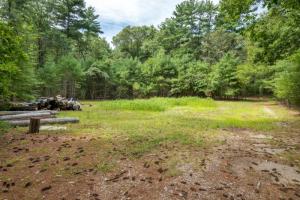
The event at Muster Field (more commonly known as the playing field for the now-closed Decas Elementary School) was the backdrop to a plaque dedication honoring Revolutionary War soldiers who had “mustered” in the field 250 years ago.
Wareham had 10 men participate in the French and Indian War from 1754 to 1763. A decade later, about 245 Wareham men fought in the Revolutionary War, said Lt. Howard Smith of the Wareham Minutemen and Militia Companies, who organized the event and the plaque dedication. Muster Field in front of the former Decas School was used by the Minutemen to assemble and drill.
“Places like this are more than simply pieces of land,” said Select Board Chair Sarah Corbitt. “They’re reminders of the people who came before us: The men and women who gathered here, prepared to serve and answered the call when their community and their country needed them.”
The Community Events Committee gave the first grant to make Saturday’s event possible. Corbitt said the plaque would allow future generations to understand the significance of the field and the sacrifice and service it represents.
“History is not just found in books,” she said. “It is right here in our neighborhoods, our fields, our buildings and our community traditions.”
Wareham was incorporated in 1739, which means it’s now closer to its 300th anniversary while the nation celebrates its 250th. On Saturday, U.S. Rep. William Keating gave the town a flag that flew over the nation’s capitol “in honoring our country’s beginning,” which was accepted by Corbitt.
State Sen. Kelly Dooner also attended the event, and said she was proud and honored to be there as the daughter of a veteran.
At the time of the plaque unveiling, Smith went off script and chose someone in attendance to unveil the plaque: JROTC teacher Col. Matt Stanton. “I thought it was only right to ask him” because of his contributions to the JROTC, Smith told Wareham Week.
“It’s just a tremendous honor, honor of a lifetime, because I know how hard the Wareham Minutemen and Militia work to recognize the history and pass on the lessons learned to the younger generation,” said Stanton, who was “not at all” expecting the honor. “Over the years, I’ve just grown to admire and love the group so much for what they do for our community and nation.”
During the ceremony, Cape Cod Sons of the American Revolution President David Schafer presented the Minutemen a payroll from the war belonging to Nathaniel Hammond. The Minutemen, dressed in historic clothing, performed a three-musket volley salute, and the fife and drum corps set the backdrop with traditional melodies including “Yankee Doodle.” Chris Berg performed “Taps” on the trumpet and Steve Ruiz, who began the ceremony with the national anthem, sang “God Bless the USA.”